


£150 shorts: running brands came to fashion week for the luxury shopper
Forty runners arrived for breakfast at Dover Street Market, drenched in sweat. Then came the buyer appointments. This is how running brands do business now.
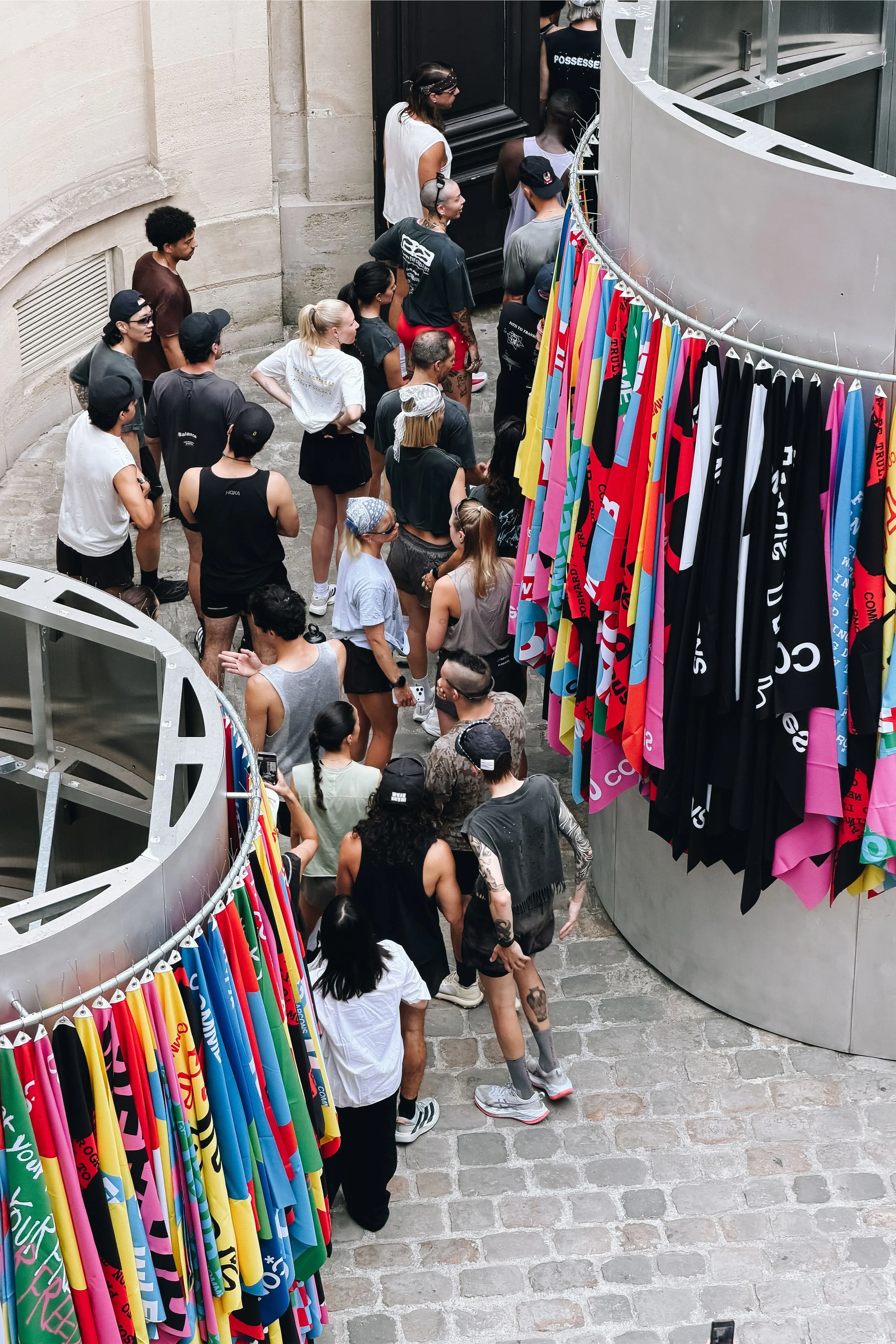
On day four of Men’s Fashion Week, around 40 runners arrived for breakfast at Dover Street Market’s Rose Bakery in Paris, drenched in sweat. The invite-only event was hosted by Satisfy, the French running brand with a punk rock aesthetic. Afterwards came showroom appointments for buyers to place orders for its spring/summer 2027 collection.
Two days earlier, District Vision, the design-led LA brand, hosted an evening drinks reception in its Marais showroom; guests from retailers such as Mr Porter came for relationship-building in a setting more relaxed than a typical sales meeting. Sports brands have not historically been a fixture of Paris Fashion Week, yet it is increasingly common.
Where marathon weekends have become a boon for customer events, Paris Fashion Week has become the running industry’s luxury trade show. Running brands once sold almost exclusively into mainstream specialty stores, via individual appointments or sport-specific trade shows like The Running Event (TRE) in Texas. Today, fashion-led retailers are among the biggest stockists for many style-minded performance brands.
“It’s the one place where 120 of our wholesale accounts show up, all of our sales agents reliably show up, and our orders are growing 30-40% season-on-season,” says Max Vallot, co-founder of District Vision.
Running has become a fashionable pursuit. Run clubs were popularised as a sober way to socialise, and completing a marathon — once niche — has emerged as a modern status symbol. The global running apparel and footwear industry was worth $23.3 billion in 2024 and is expected to grow at 9.2% a year to $51.6 billion by 2033, according to Custom Market Insights. “We’re a luxury retailer, but our sports category is on a constantly upward trajectory,” says Daniel Todd, head of buying at Mr Porter, which stocks District Vision, Satisfy, Norda and Literary Sport, known as “The Row of running.” “Previously, sports was driven by footwear, but right now, there’s stronger growth in apparel.”

It makes sense: the lines between sportswear and lifestyle keep blurring. “We’ve always said we make products for people who run, not ‘runners’,” says chief brand officer Daniel Groh. “That naturally attracts a much broader audience.” Just as Arc’teryx Beta jackets became an urban staple, performance pieces today don’t always look like performance wear: District Vision sells lightweight, floppy-collared merino sweaters alongside precision sports eyewear handmade in Japan.
There is currently no dedicated trade show for style-led premium sports brands — hence Paris. The proximity to luxury is changing how brands show up: running has typically focused on open community events, but in Paris the invites are gated and it rarely involves running. Literary Sport held a morning walk and breakfast to launch its Vibram-soled sandals; On hosted a dinner for 60 with a multi-course feast including hand-blown sugar flowers for dessert, at a purpose-built spherical table designed to reflect the On logo.
Prices explain the rest. Literary Sport’s women’s bike shorts retail for £176, District Vision’s waffle-knit tops cost £160, and Satisfy’s shorts start at £150. “Sport has traditionally been very discount-driven,” says Todd. “When you sit these brands alongside the cost of luxury products, of course it’s still expensive, but the value ratio is favourable.”
Wholesale partnerships with global fashion retailers offer small brands more customers, global visibility, bigger orders — which earn better factory pricing — and often upfront payment. “For the first seven years, we wouldn’t have got our foot in the door at some factories had it not been for the larger order volumes bought by fashion retailers,” says Tom Daly, District Vision’s co-founder. The business is still predominantly direct-to-consumer — it recently opened its first store in Los Angeles — but wholesale matters, especially amid tariffs on overseas shipments. Wholesale, Daly says, fuels the “commercial engine.” “We will always prioritise our DTC customer with our collections, but we have responded to buyer feedback very fast and aggressively, so it’s now much closer to the market,” adds Vallot. “It’s better priced, it’s better merchandise — we’ve expanded our accessories as entry-level price points based on buyer ask.”
Satisfy’s business is split 50-50 between DTC and wholesale, with 70% of wholesale accounts being fashion stores. In its decade since launch it has grown to €11 million in annual revenues, and in 2025 it secured €11 million in Series B funding led by Chanel heir David Wertheimer. It plans to become a €100 million company. The remaining 30% of wholesale accounts are independent, design-led running stores — Knees Up (London), Handshake (Brussels), Metta Running House (Mexico City), Long Slow Distance (LA), Running Wylder (San Francisco) — building outlets closer to a fashion concept boutique than a Sports Direct.
The buyer demographic in Paris is changing too: it is no longer just about reaching major luxury retailers but getting orders from smaller specialty stores — one gives reach, the other credibility. “Our network has exploded since we started coming to Paris,” says Knees Up co-owner Matt Horrocks. “It’s a melting pot of buyers and creatives.” For small European independents, a trip to the US for TRE is cost-prohibitive.
Wholesale still needs careful navigation. Many brands, District Vision included, are “being more cautious” about order quantities placed with boutiques: enthusiasm for running does not necessarily equate to a stable retail enterprise, and having a community is not the same as being able to sell to it. “It’s a very nascent and exciting market, but not all of them are showing the sell-through and payment reliability that a small brand like District Vision is dependent on,” says Vallot. “During Covid, we thought we were going to go under… until Mr Porter paid for their orders upfront.”