


The atelier that spent forty years embroidering for Dior and Prada has launched its own label
Chanakya embroidered for Dior, Prada and Fendi. Now the Swalis, mother and daughter, are taking their own label Chorus global — and 40% of its online sales are already international.
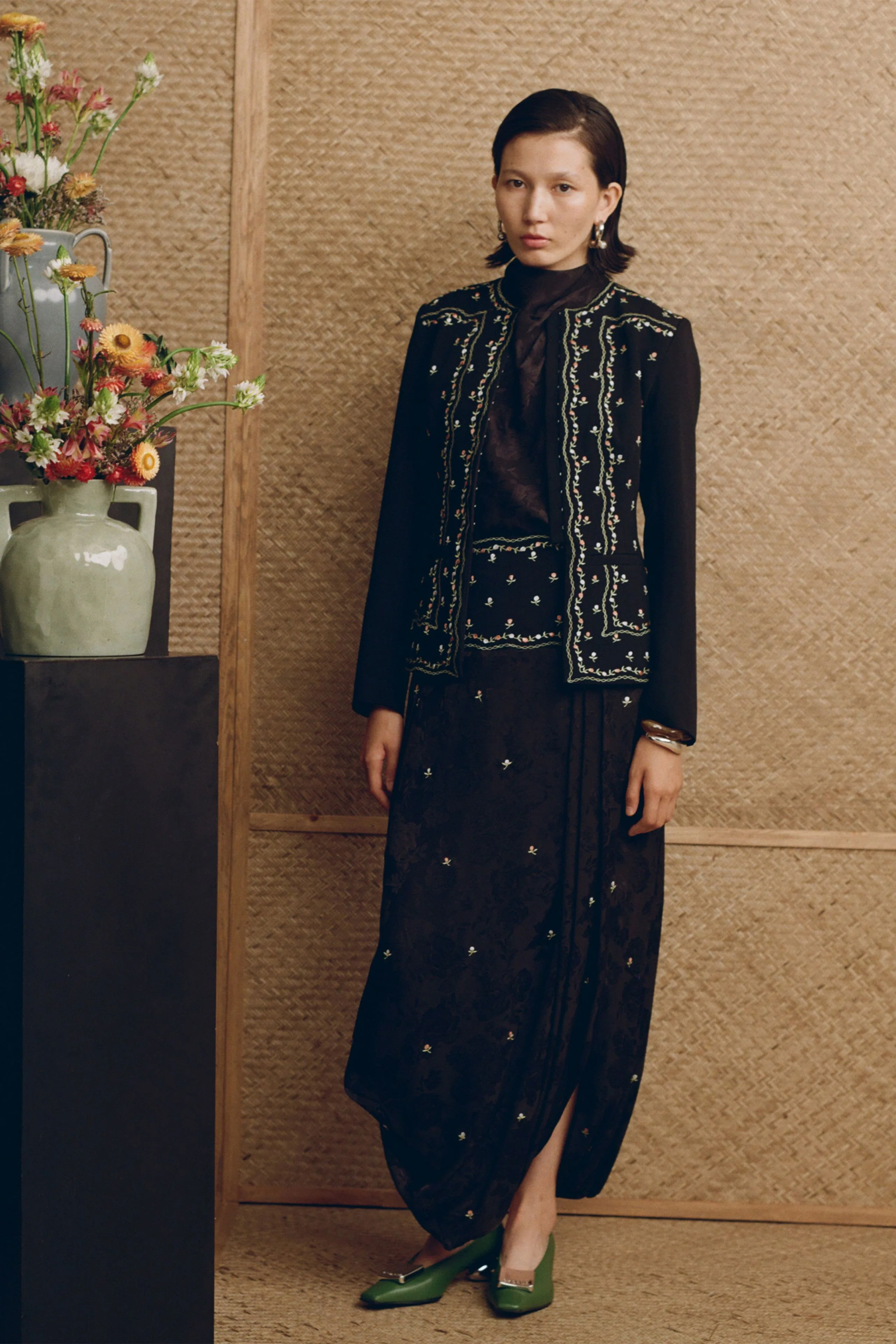
For four decades, Indian textile house Chanakya International has produced some of the world’s most intricate embroidery for other people’s labels: Dior, Prada, Fendi. Its most visible moment came in 2023, when Chanakya’s artisans brought their craft to Dior’s pre-fall show at Mumbai’s Gateway of India. Now the atelier is attempting something far rarer: turning from one of fashion’s most influential makers into a brand in its own right.
The label is called Chorus. It was founded in late 2025 by Karishma Swali, creative director and managing director of Chanakya International, alongside her daughter Avantika. “Avantika and I founded Chorus as an interdisciplinary practice grounded in the textile intelligence of the Indian subcontinent, creating womenswear, objects and works of art that imagine textiles as architecture,” Swali says. The first resort collection lands exclusively on Moda Operandi and, in parallel, on the brand’s own site.
The seven-month-old label already has two stores, in Mumbai and Delhi, and retails at Galeries Lafayette Mumbai. But it has been years in the making: behind it sit Chanakya’s forty-year history, around 10,000 historical pieces recreated and more than 100,000 documented craft explorations. Earlier, mother and daughter launched Moonray during Covid, “as a space of joy, where craft, consciousness, and beauty met with ease.” Moonray shuttered in 2025 to make way for Chorus: “As Moonray’s roots deepened, so did its voice. Chorus is that next chapter.”
The difference is ambition. Moonray was built for the Indian market; Chorus aims to give the world an Indian label that can sit next to international contemporary brands without reading as derivative. “The Chorus woman is curious, always seeking, and discerning,” Swali says. “She moves comfortably between cultures and treats personal style as a form of self-expression.”
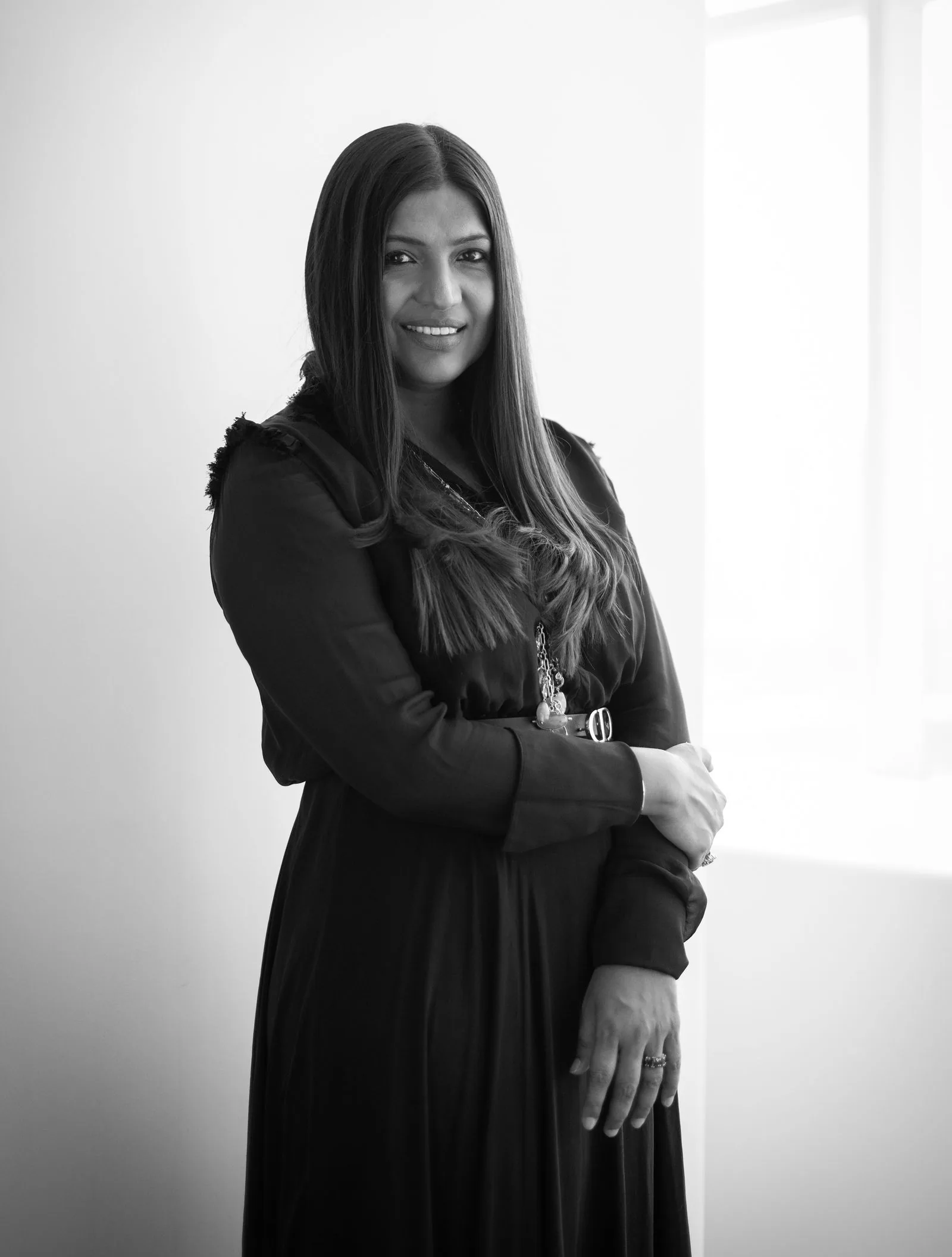
The brand runs on five interconnected channels: ready-to-wear, the made-to-measure Chorus Edition, Chorus Café, Chorus Wellness and Chorus Concept. All of it lives in a three-level store in a heritage building in Mumbai. “Clothes sit alongside interdisciplinary wall art and sculpture throughout, so the collection is never seen in isolation but as part of a larger material conversation.”
The creative core includes, besides Swali, 19-year-old Avantika, currently studying art history at Stanford; Tina and Nikita Sutradhar, winners of the 2014 LVMH Special Jury Prize; designer Joohi Mehta; and embroidery specialist Renu Sahu.
The resort 2027 collection draws on the botanical language of Indian chintz and the fluid vocabulary of the sari and the dhoti, two of the subcontinent’s oldest unstitched garments. Hence the looseness: skirts that wrap and fall, tops that drape softly against the body. It was developed with Saliyar weavers in Tamil Nadu and Angami Naga weavers in Nagaland.
The timing helps. Fashion is looking to be more diverse and increasingly looks East, and shoppers are waking up to the fact that craft is what drives luxury today. “There’s a real, growing awareness globally of what these knowledge systems can offer contemporary design,” Swali says. International sales account for 40% of Chorus’s e-commerce business since launch, with strong revenues from the Middle East and the US.
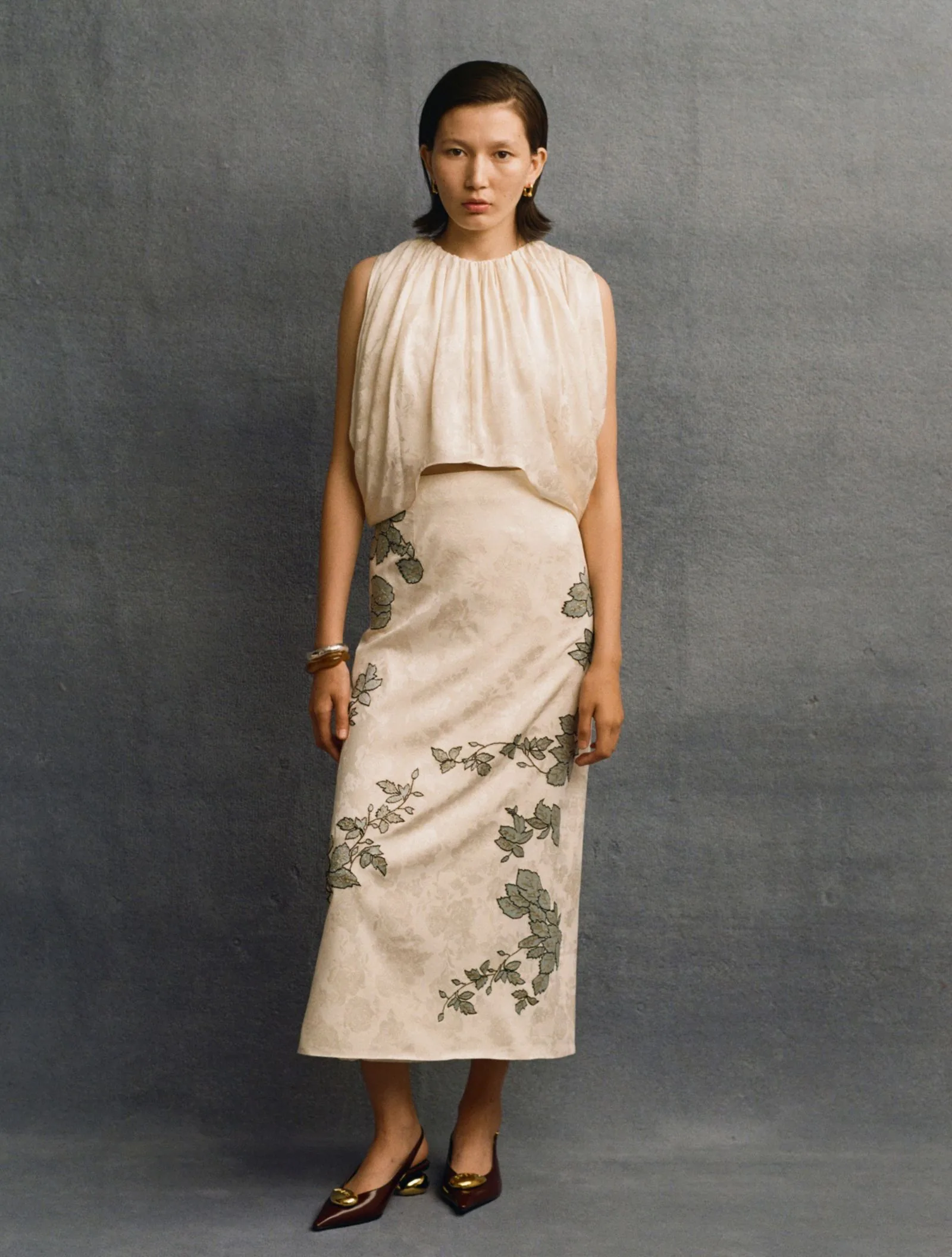
“We first launched the brand earlier this year through a trunk show, and based on the response, expanded into further in-season development for our assortment,” says Marc Rofsky, VP of ready-to-wear merchandising at Moda Operandi. Prices run from $420 to $7,200. “Chorus offers a unique price value proposition, with a feminine, sophisticated aesthetic that continues to see strong demand in the eveningwear space.”
The Indian market stays central to the plan. “We’d like the markets to grow in tandem rather than treat them as sequential. Chorus has always been an India-rooted practice with a global outlook,” Swali explains.
And that is the real story. It is not only another Indian label arriving on the global stage. It signals a shift in which the ateliers that have long shaped luxury from behind the scenes step forward to define it in their own name.