


The United States of luxury: Scottsdale, Nashville and the cities everyone is running to
“When luxury brands started opening in Williamsburg, I was skeptical. Now, we’re so far past Williamsburg.” Here is where they are going.
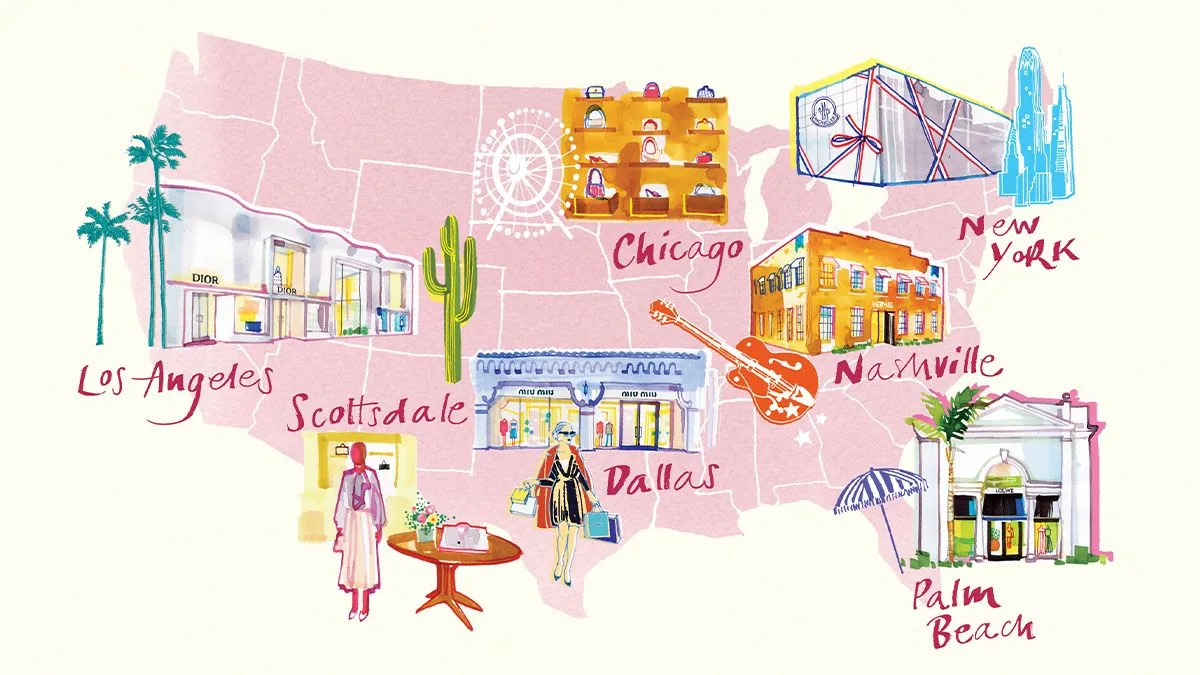
The United States is back in fashion — at least as far as luxury is concerned. Brands across the board are focusing on the US, upping their flagship sizes and specs, and venturing further into the country after years of prioritising slim slices of the coasts.
North America led luxury store openings in 2025, accounting for 27% globally, according to Savills. “Every brand I talk to is reinvesting in the US,” says HSBC US head of retail and apparel Eric Fisch.
Several levers are behind it. The main one is a Chinese market that has yet to bounce back. “There was this view that China was shut for Covid, and then it was going to just explode. Here we are six years later and there hasn’t been any explosion,” Fisch says, adding that the rise of local Chinese challenger brands has also hindered luxury’s comeback. In the US, employment rates remain solid and the stock market is up, driving confidence — and spend — among high-net-worth shoppers.
The US has been a bright spot in recent quarters. The Sun Belt is where to watch, Fisch says, highlighting Charlotte, Nashville, Miami and Charleston. “It’s a combination of local wealth and more tourism flowing to those markets. Brands are realising that there’s a great ROI opportunity on the leases that are obviously less than those on Fifth Avenue or Newbury Street, but have a lot of foot traffic.”
Scottsdale. Resort-esque: the desert landscape means malls reign supreme, while sprawling golf courses offer a place to congregate. The consumer: affluent retirees and wealthy out-of-towners with second homes, plus wealthy families whose parents live day-to-day in athleisure — with gold jewellery, expensive handbags and Chanel flats or Gucci sneakers — but dress up for the country club. Much of the luxury is concentrated in department stores; it is hot year-round. Scottsdale Fashion Square is home to Arizona-first boutiques including Dior and Brunello Cucinelli. Even Hermès, which tends to look for unexpected locations, opted for the tried-and-true mall.
Honolulu. Beachy island living with a city twist — far more high-rises than one might expect. The consumer: locals and foreign investors buying luxury property. Tourists come ready to spend and save: tax rates in Hawaii are about 4%, and many brands offer “Hawaii pricing” about 10% below mainland prices, while locals are eligible for kamaʻāina discounts. Ala Moana is the world’s largest open-air mall; Royal Hawaiian Center is ten minutes down the coast. For strolling, Kalākaua Avenue has Kith and Luxury Row, from Chanel to Bottega Veneta.
Los Angeles. Sunny, sandy, laid-back. Everyone drives, so sidewalks are sparse — but the Erewhons and Urth Caffés are heaving all day. The consumer: Hollywood execs and agents, startup employees and entrepreneurs. “They are startups, they are independent, a lot of people in the service industry, they’re entrepreneurs,” Gildo Zegna said of LA’s top consumers. “There are people who need lots of capital.” Plus influencers, creators and freelancers with money to spend. Rodeo Drive remains the obvious choice; Melrose Avenue and Melrose Place are the lower-key option, drawing The Row and Khaite. Palisades Village reopens in August after last year’s wildfires.
San Francisco and Silicon Valley. Buttoned-up, smart-casual. The consumer: AI millionaires, tech elite and employees keen to swap On sneakers and windbreakers for Succession-esque quiet luxury, plus fashion-forward working women. Union Square is the go-to, revived by re-openings like The RealReal; McMullen’s new boutique opens on Maiden Lane; laid-back Jackson Square has Thom Browne and Isabel Marant. Brands are also heading to Westfield Valley Fair in South Bay to capture tech wealth.
Las Vegas. Showy, splashy, high-energy; some call the Strip Disneyland for adults, and the Sphere has become the city’s cultural epicentre. The consumer: historically gamblers, conference-goers and partiers, now also visitors for sporting and entertainment events plus wealthy residents who decamped from California for better tax rates. Stores are concentrated in malls attached to hotels and casinos — The Shops at Crystals, Forum Shops at Caesars Palace, Fontainebleau Las Vegas — and they are big and showy, where brands often test new products and categories.
Detroit. Close-knit and community-focused. The city’s real estate has developed a lot in recent years, as has its luxury offering since Gucci opened in 2022. The consumer: wealthy residents who invest heavily in real estate and in the Somerset Collection mall; the city is less trend-driven and leans into self-expression. Luxury is concentrated in Somerset Collection, a 20-minute drive out, but is starting to set up closer to the centre — Gucci opened on Library Street in downtown Detroit.
Columbus. Youthful: Ohio State University has a big presence and young professionals keep moving in. Many suburbs rank among the most affluent in the Midwest, and Fortune 500 executives and employees live in the city, including at Abercrombie & Fitch, Victoria’s Secret and DSW. The dressing is more laid-back. Luxury is concentrated in Easton Town Center, home to Louis Vuitton and Gucci plus recent openings like David Yurman and Golden Goose, a 15-minute drive from downtown.
Chicago and the North Shore. Chicago is Midwest-meets-coastal city. A 30-minute drive from downtown, the North Shore is a string of laid-back, picturesque communities along Lake Michigan — more parks and trees than high-rises.