


“I started with five quid at my kitchen table”: Studio Nicholson steps onto the runway
The British label broke through in Japan first, at home only later. Sixteen years on: a first Paris show and revenue up 56% in three years.
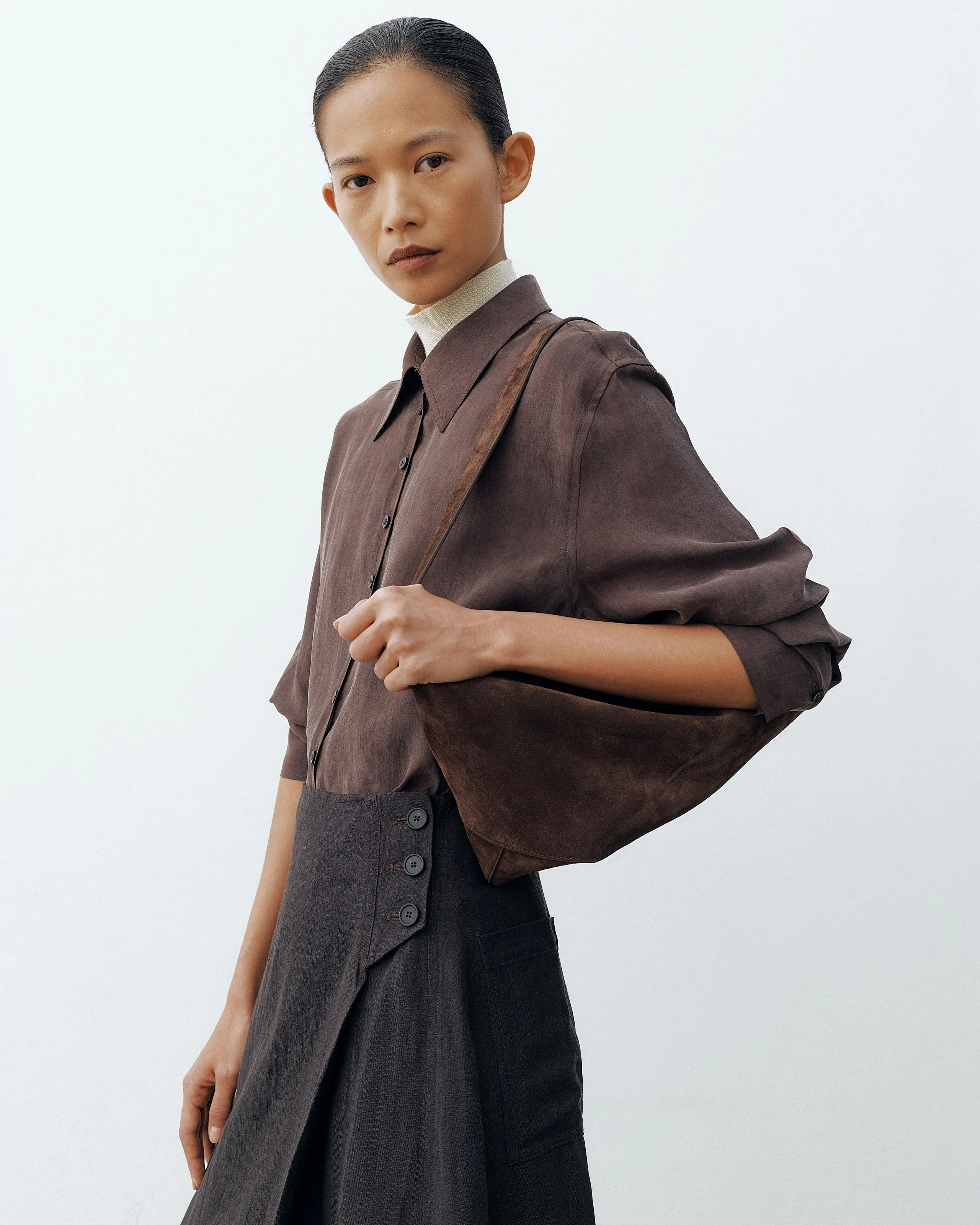
London-born label Studio Nicholson is unveiling its first runway collection after 16 years in business. The move forms part of a strategy to build authority and reposition the label amongst luxury giants in stores across the globe.
Its path is unusual. Despite its UK base, Studio Nicholson launched its wholesale business in Japan, where founder and creative director Nick Wakeman had sourced early inspiration for the label’s sturdy workwear codes. Early stockists included Journal Standard and 1LDK. “We wouldn’t be alive without the Japanese,” she says. “It was a natural territory to start with.” She previously co-owned another label, Birdie, alongside Kazuyoshi Minamimagoe, then buying director of Beams. Unlike most cult Japanese-style basics brands, Studio Nicholson started with womenswear; menswear came in 2017. Today the split is 55% men’s and 45% women’s.
In London, where wholesale launched in 2010, it was a slower burn, reliant on the now-defunct concept store The Shop at Bluebird, Liberty and small independents. “I don’t know. It’s a weird thing, but London was never a huge focus for me or the brand,” Wakeman admits. More recently the label has expanded its wholesale footprint in South Korea and China, as well as Europe and the US.
The value proposition is rooted in high-quality production — premium European mills and factories have been integral — and a refreshingly reasonable pricing architecture. Today the cheapest item on its site is a £20 tote bag and the most expensive a £2,400 sheepskin bomber.
CEO Mark Suddards — who previously helped take Ganni from a small cult brand to a global contender — has led the strategic charge alongside Wakeman since joining as managing director in May 2023, becoming CEO in December 2024. “Our strategy now firmly sits around how we take our niche East London brand and become more of a global player,” he says. “How do we really assert our position against some of the contemporary brands: the Lemaires of the world, the Auralees. When you look at what they invest into marketing and how they position their brands globally, of course, all of them do shows in Paris.”
The results look positive. From 2023 to 2026, revenues have grown 56% thanks to category expansion. The average global transaction value for DTC fluctuates “between £450 and £500,” and within the first seven months of this financial year (ending September 30) the brand has seen 25% growth, teeing it up for another record year. In the last three years, DTC retail via its London stores, online and Farfetch has climbed 87%, while wholesale increased 36%, securing 200 new retailers in two years, including Mytheresa, Bloomingdale’s and Selfridges.
The company works with advisory firm Rianta Capital. “They came in in 2016 with a very small investment, and we’ve had no investments since,” says Wakeman, who was sole director before that. “I started the brand with five quid at my kitchen table.” In the 2024-2025 financial year the company reported a profit of £241,000.
Studio Nicholson plans to reach 400 wholesale accounts imminently, alongside ongoing DTC expansion. A visual shake-up is underway, including a newly designed SN logo. “We wanted more of a robust, established logo that really made us feel like a true British brand,” says Suddards. “It’s important, particularly for markets like Asia.” China, Japan and South Korea account for 35% of the business.
A particular strength is modularity: customers can build an entire wardrobe from the brand’s range alone. “The customer comes back. Our store teams will say to us, ‘Oh, they were in last week to buy a trouser. He just popped back in because he wants the shirt; he’s seen the way it’s styled on e-comm,’” says Suddards. Building on that, the brand is developing accessories and shoes, hoping to push them to 20% of the product mix, and has hired an in-house designer for it. “He’s a very accomplished shoe designer,” says Wakeman. “And a pretty accomplished bag designer, it turned out as well.” For now, 40% of the business is trousers.